Open Case Files
Case Files
Choose a case to interrogate.
Case list
 TUTORIAL-001
Operational Test
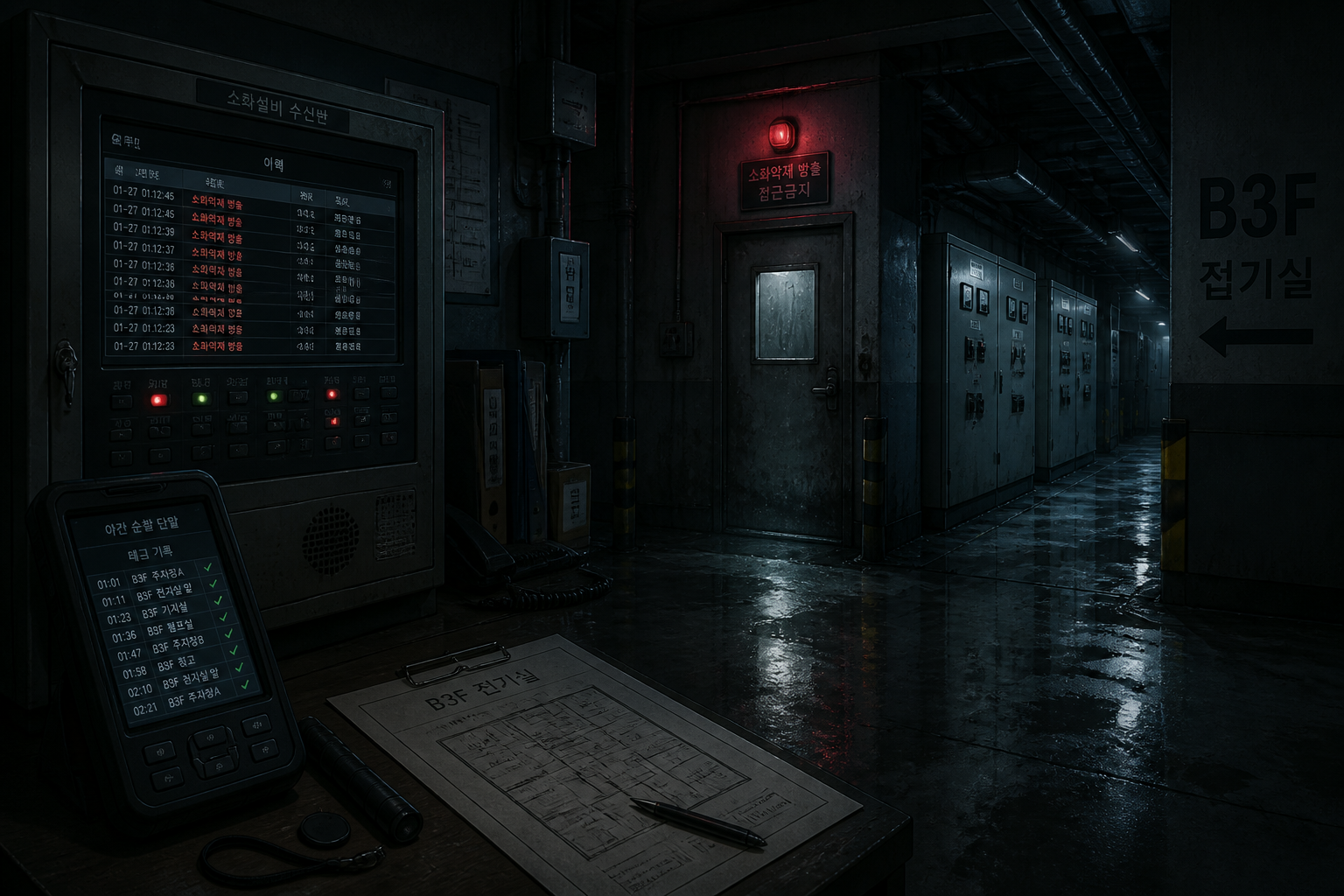
Tutorial · freeDeep into a winter night, in the electrical room on basement level 3 of a 1,200-unit apartment complex, Jeong Hae-gil (68), auditor of the residents' representative council, was found dead. Above, residents slept; heating and elevators ran normally through the night. Cause of death: acute asphyxiation from high-concentration carbon dioxide inhalation—that night, the fire suppression system in the electrical room zone discharged its agent, and he was inside the sealed area. Management calls it an accident. Interrogate the three people entangled in that night's basement, and determine whose hand set this death in motion.2026-07-27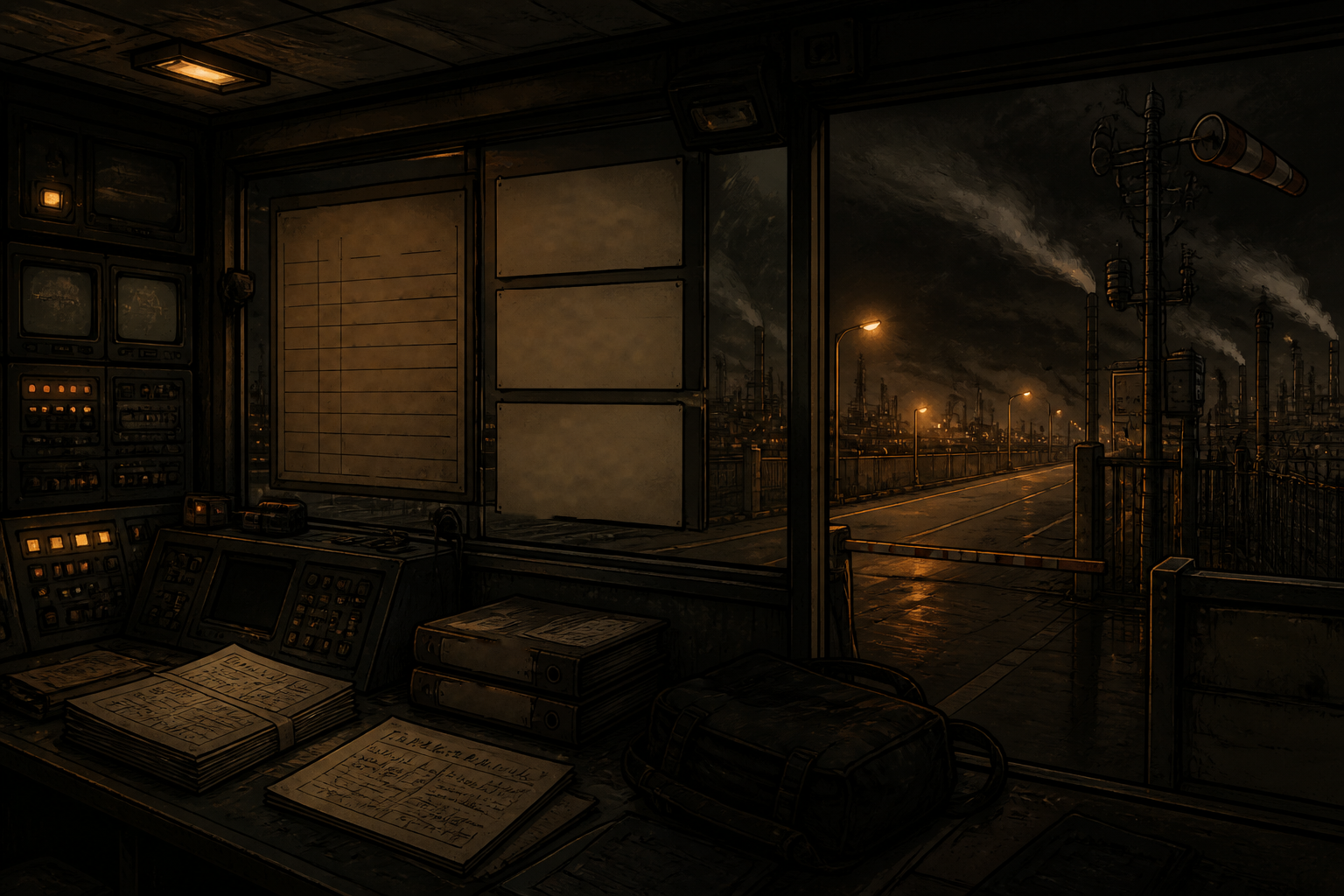 DAILY-DOWNWIND
Where the Wind Blows
Sign in requiredAn industrial park facing the border runs day and night, lights burning. That dawn, acrid gas leaked from a factory at the western edge of the complex, and from the alert room in the center, a broadcast went out telling people which way to evacuate. The second announcement told them to gather at the north levee road; the third told them to exit through the east common gate and wait across the highway. The wind blew east all that dawn. Héctor Nájera, the joint safety inspector for the complex, heard the third announcement, turned around, walked the eastern route twice, said he couldn't breathe that afternoon, and died before sunset. Two broadcasts from the same room on the same night pointed in opposite directions. You must call in the three people who were inside the alert room and the two who were outside, seat them one by one, and trace where those two directions diverged.2026-08-11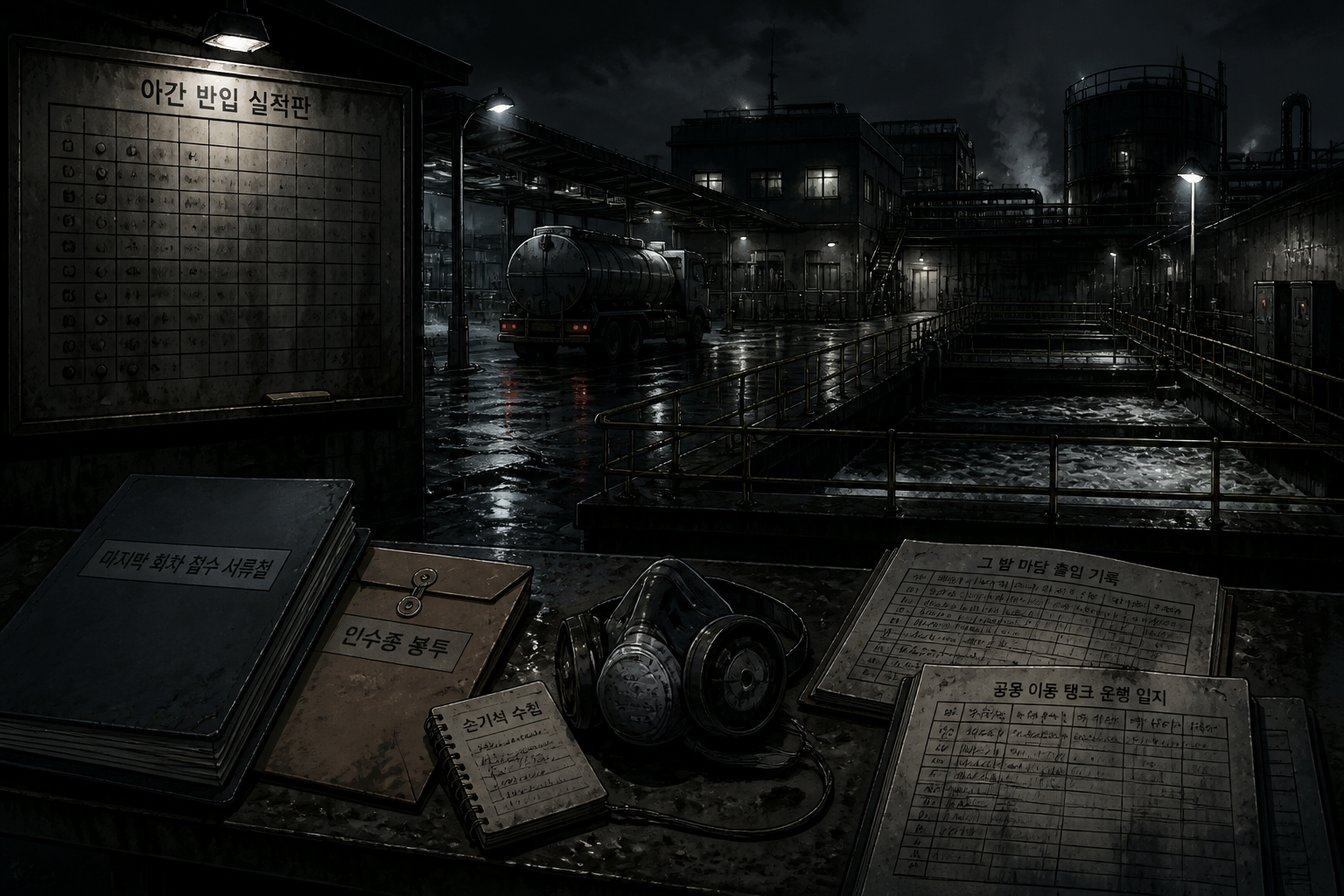 DAILY-PENALTY-LOOP
Penalty Points
Sign in requiredEleven electroplating factories—places that coat metal surfaces with thin metallic films—pool their money to share a treatment facility. The wastewater they use and discard arrives every night to be processed in sequence. One night in June, night-shift foreman Son Ki-seok was found collapsed beside a treatment tank in the facility and rushed to the hospital, where he died. Cause of death: inhaling gas that rose from the tank. Something that should never have entered that tank went in that night. The logbook won't say who accepted the final delivery.2026-08-11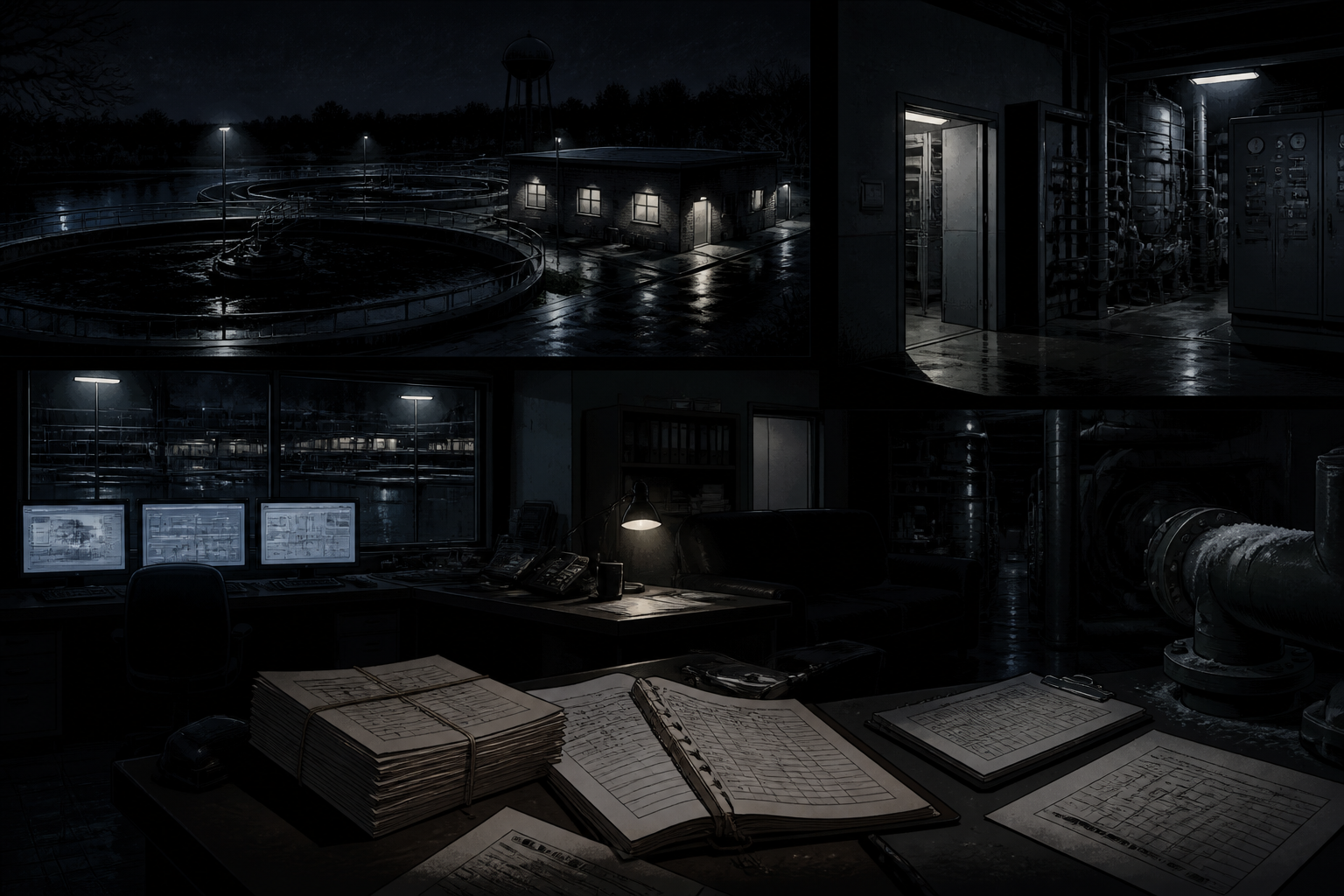 DAILY-OZONE-HOUR
Empty
Sign in requiredThe municipal water treatment plant in Milkcreek, a small town in the American Midwest, shuts down its ozone system every night for inspection, then brings it back up before morning water demand rises. One October night, Elmer Bascom, who'd worked twenty years at this plant handling water quality and records, walked out of the ozone generator room on his own two feet and sat down on the office wing couch. He coughed, said he was fine, then by dawn his breathing grew labored and he was taken to the hospital, where he didn't make it through the day. Five people were on the plant grounds that night. Trace where the single word 'empty' came from and how far it traveled.2026-08-11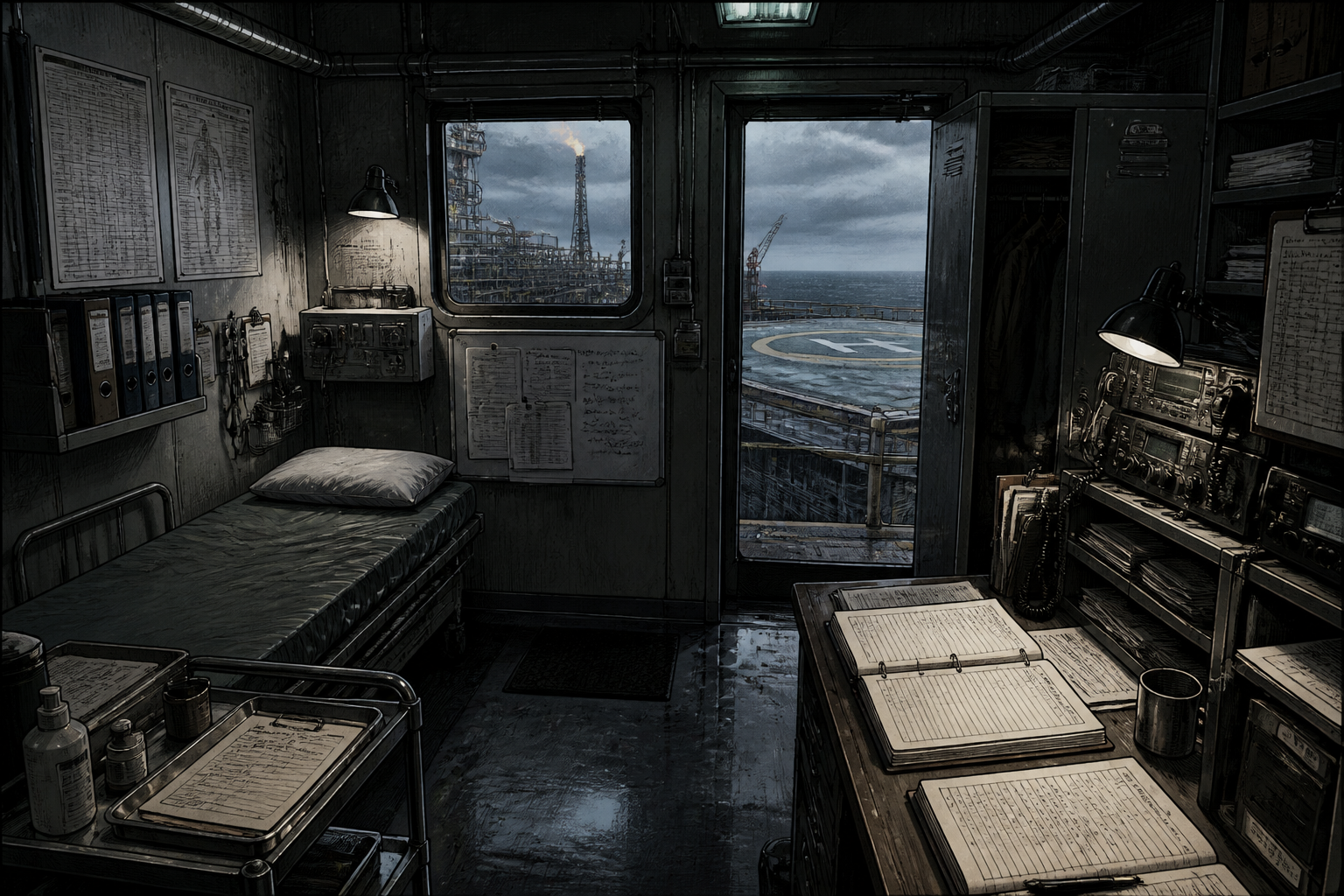 DAILY-NO-EXCEPTION
No Exception
Sign in requiredIn the middle of the North Sea stands an oil production platform that never stops running. On this steel island where a hundred souls are locked in for two-week shifts, pipe maintenance foreman Vidar Grimstad complained of stomach pain, lay in the infirmary bed for two days, was finally airlifted out, and died on the operating table at a mainland hospital. What had ruptured inside him had already spread throughout his body. During those two days the sky was clear and the regular helicopters flew twice daily. The sky was not what was blocked. Ask what closed that route during those two days.2026-08-11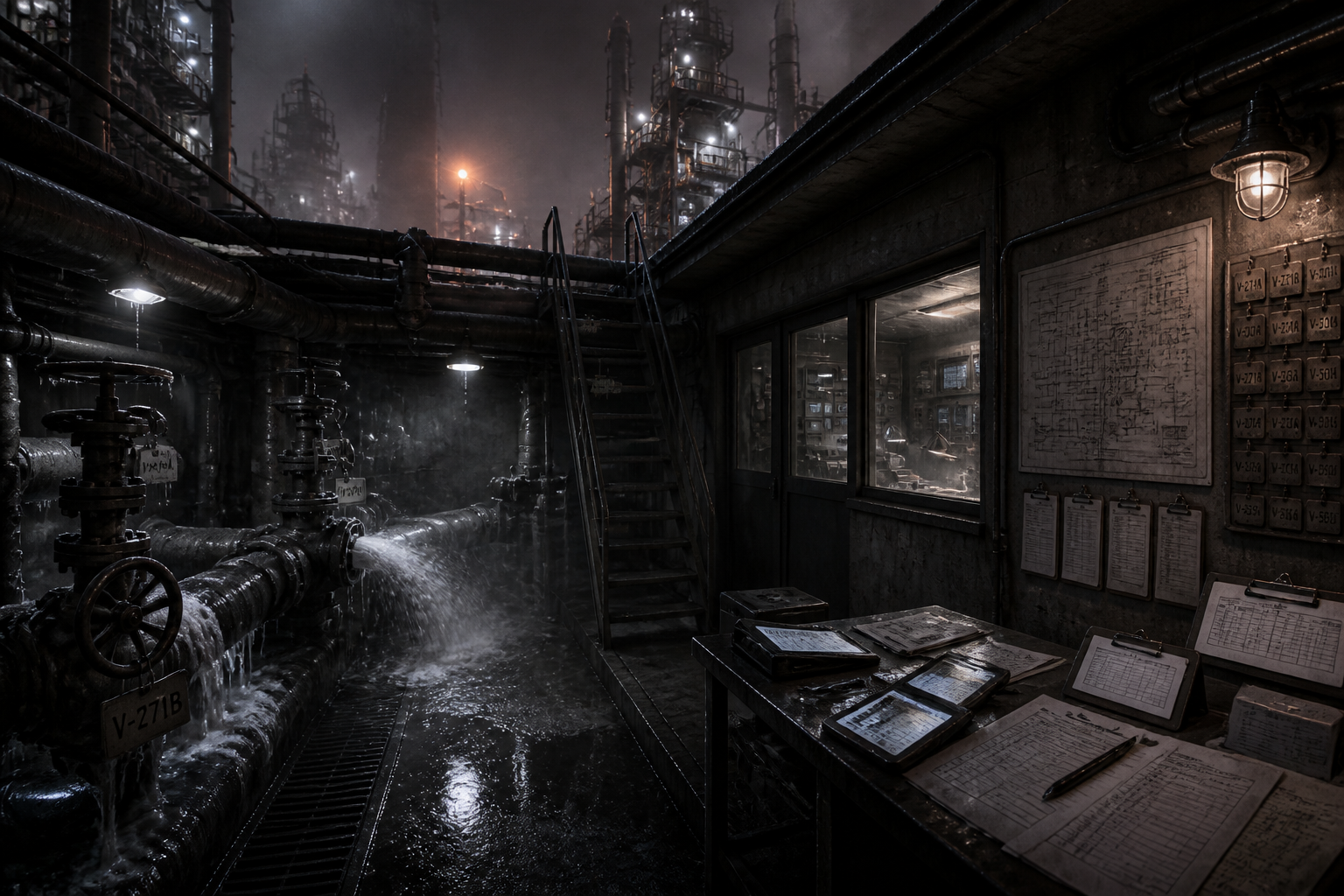 DAILY-SAME-NUMBER
The Same Number
Sign in requiredThe chemical plant in the Rinkai industrial zone uses ammonia to cool its processes. In the early hours of early November, Kajita Toshio, the equipment inspection supervisor, was found collapsed in the semi-basement section where the refrigeration system piping runs and was taken to the hospital, but he did not survive the morning. The cause of death was inhalation injury—his throat swelled shut from breathing anhydrous ammonia, pure ammonia without water. At 04:12, liquid sprayed from a pipe that should have been locked off before maintenance. That dawn, the hand that closed that valve and the hand that confirmed it closed were the same.2026-08-11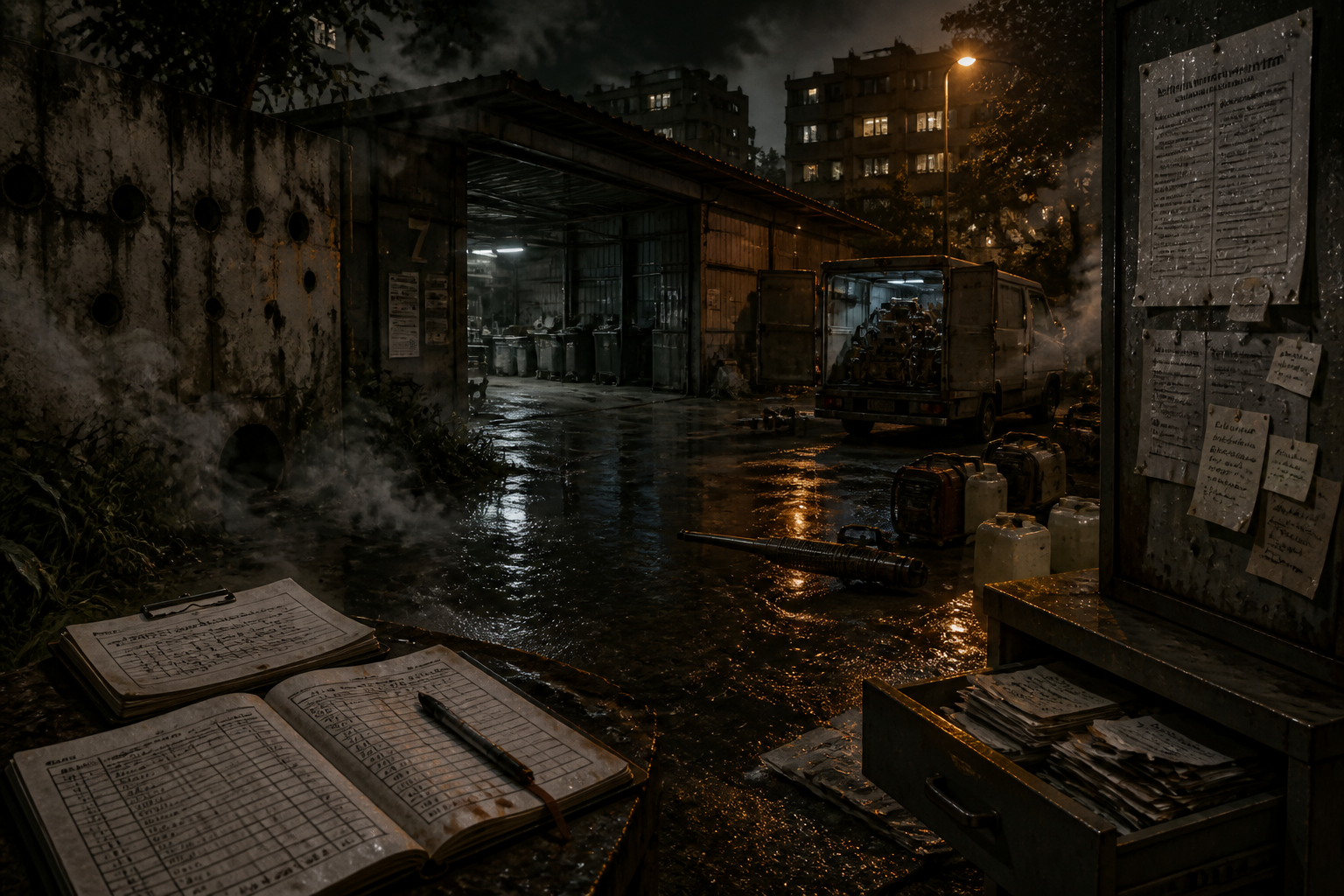 DAILY-SECOND-FOG
The Second Spray
Sign in requiredTropical nights breed insects wherever water stands, and so the estates of this city call in a pest crew every night. When the fogging, which puts the chemical out as a mist to kill the insects, sweeps along the drains and the undergrowth, people shut their windows and open them again once the smell has gone. That night too the crew came and went. In the morning the driver of the refuse truck opened the door of the waste collection bay and found the night caretaker, Ong Teck Soon, lying face down inside. That room, walled on three sides and roofed over, took the chemical twice that night, and he was inside between the two. Five people crossed between the yard and the room that night, and the five are still there. Whose hand was it that put the tube into that room a second time, before the hour it could be entered had come?2026-08-11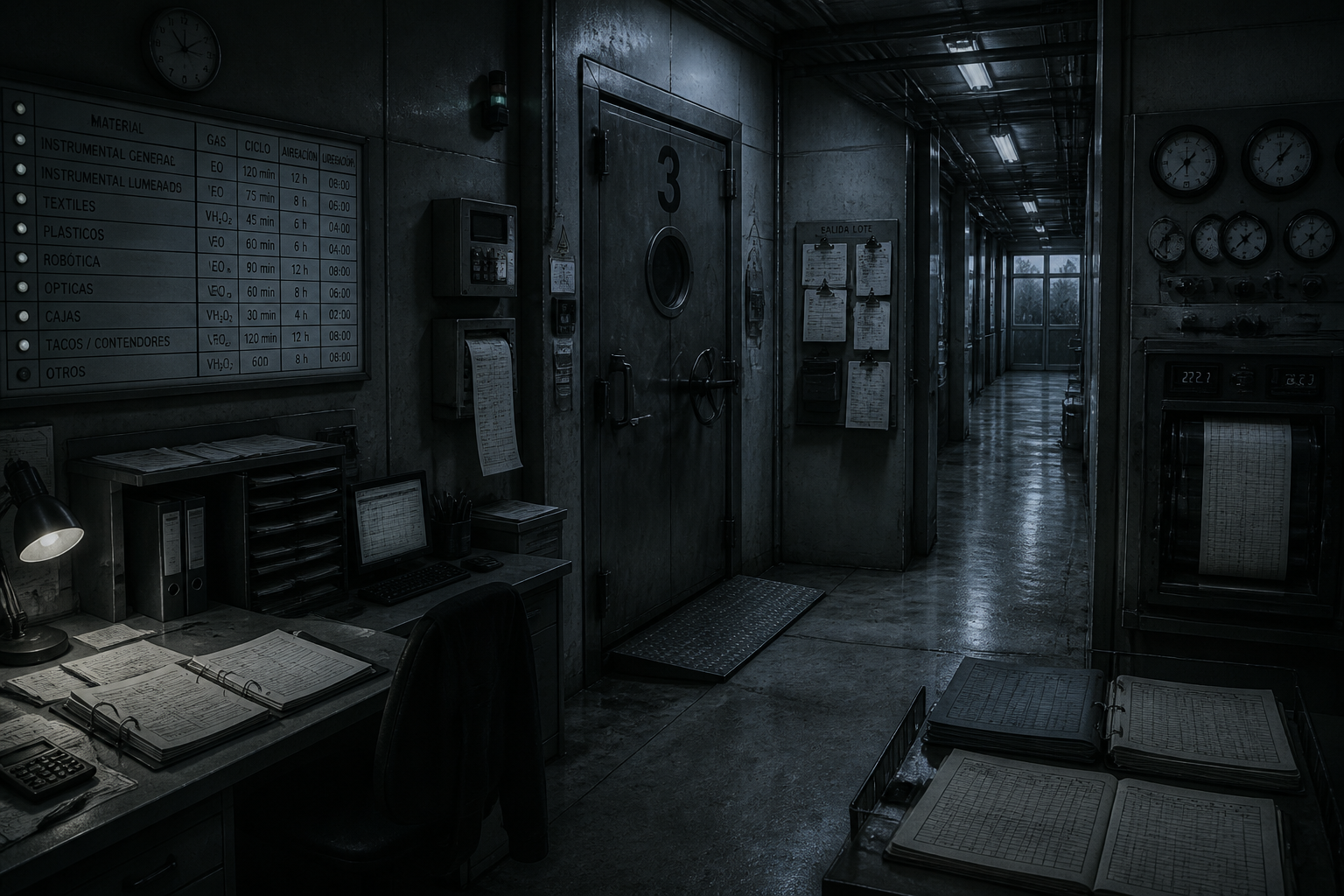 DAILY-PURGE-TIME
The Printed Hour
Sign in requiredIn an industrial park south of Madrid stands a plant that takes in instruments sent by hospitals and manufacturers, kills the germs on them, and sends them back. The goods go into a large chamber that is filled with gas and then emptied of it, after which they are moved to the room next door to wait for the share soaked into them to work its way out. How long that wait must be is set, item by item, by a chart on the wall. That night, in the corridor outside Room 3, Joaquín Salgado, who kept the process records, said he felt dizzy and sank down; he was taken to a hospital and did not last the day. The heavy door beside where he had been standing was opened once that night, and opening that door is permitted by a single sheet of paper. The hour at which it could be opened was printed on that sheet from the start. Five people passed through that corridor that night, and the hours the five of them give do not yet line up into a single row. The time Room 3 actually spent drawing the gas out that night was shorter than what the chart says.2026-08-11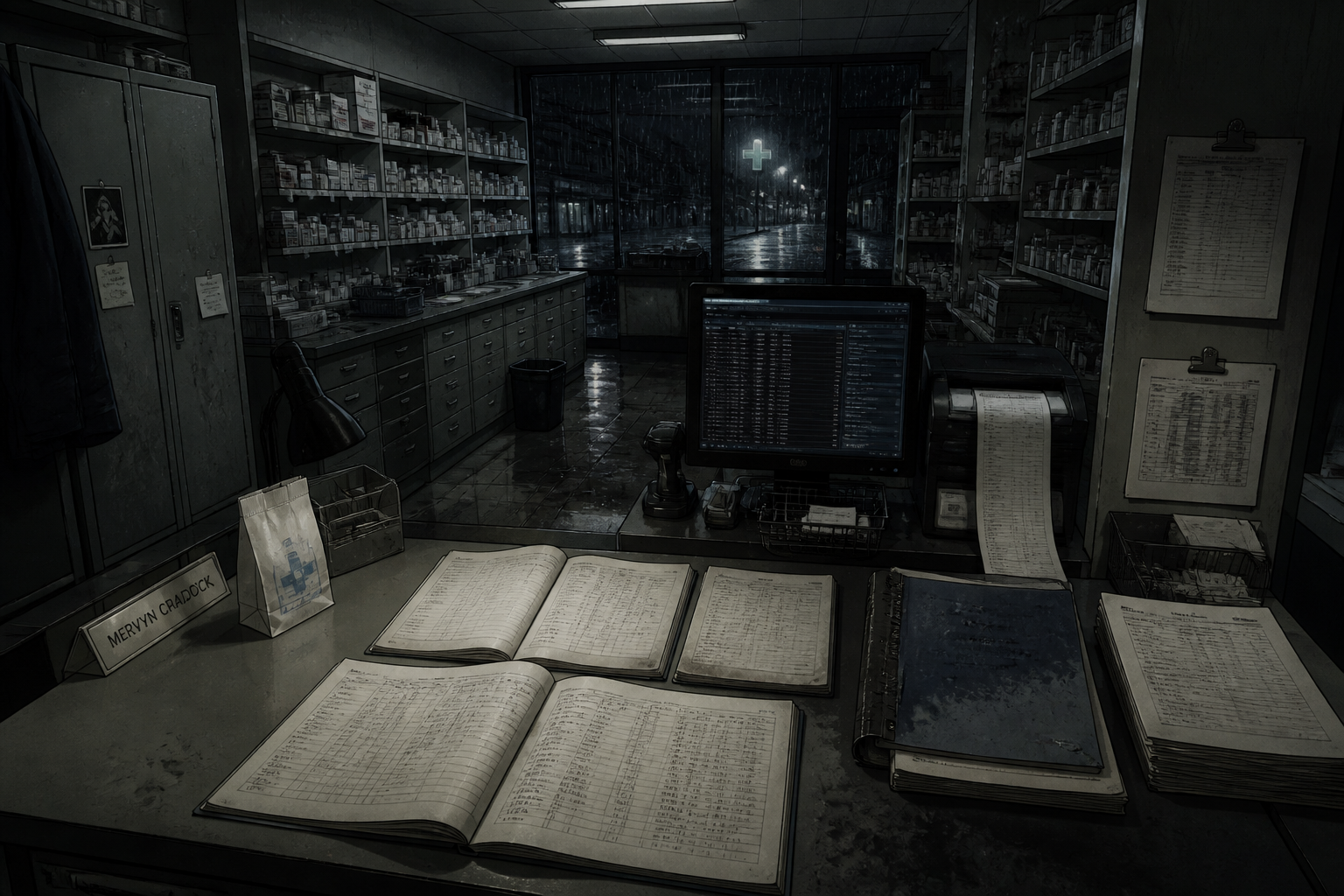 DAILY-OUT-OF-STOCK
Procurement Failure
Sign in requiredIn a small town in northern England, there's a branch of a pharmacy chain that stays open at night. An automated ordering engine runs the chain's inventory without human hands—it prices each item separately by branch, and any item that crosses a certain threshold gets dropped from that branch's list. Mervin Craddock worked twenty-two years in this branch's dispensary. He collapsed on the floor beside the dispensing counter during a night shift and died at the hospital that morning. The medication he took every day had vanished from this branch's shelves in the days prior. Match the date that line closed on the ordering list with the date he last picked up that medication, and lay them alongside the statements of the five people who passed through that dispensary.2026-08-11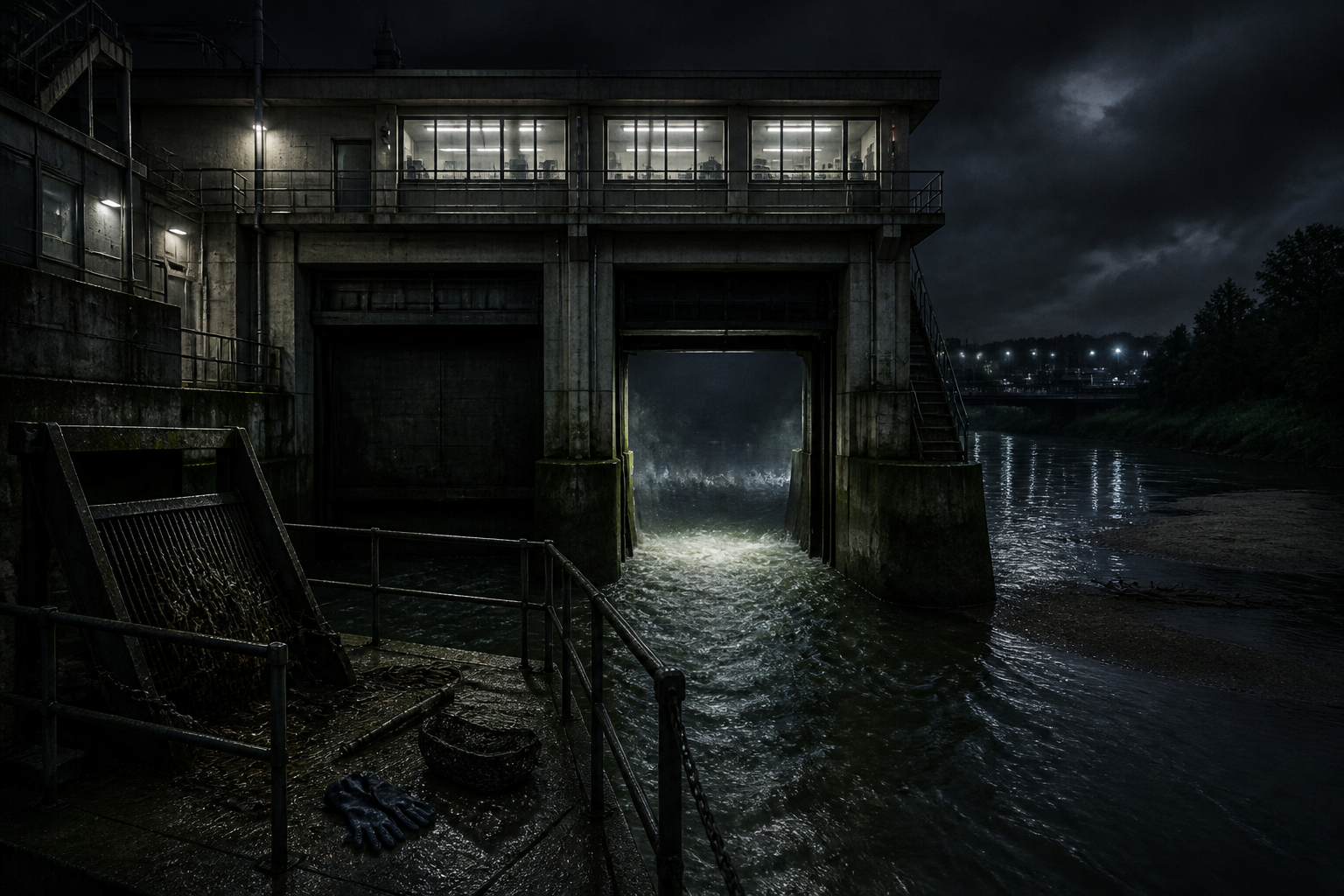 DAILY-GHOST-DESK
The Empty Chair
Sign in requiredThe night the three-day rain stopped, the riverside control station worked through the night draining the reservoir that had collected the runoff. Two floodgates beneath the operations building—the eastern gate draining reservoir water into the river, the western gate draining tributary water. Just past four in the morning, the eastern gate opened. Han Sun-gil, the facilities inspector clearing debris from the screen below, was swept away by the torrent and found at dawn on a sandbar where the channel met the river. That night the request came through proper channels, every box on the form filled in. Five people each have their story, but first you must count how many places were notified that water would be released, and which gate it was under.2026-08-11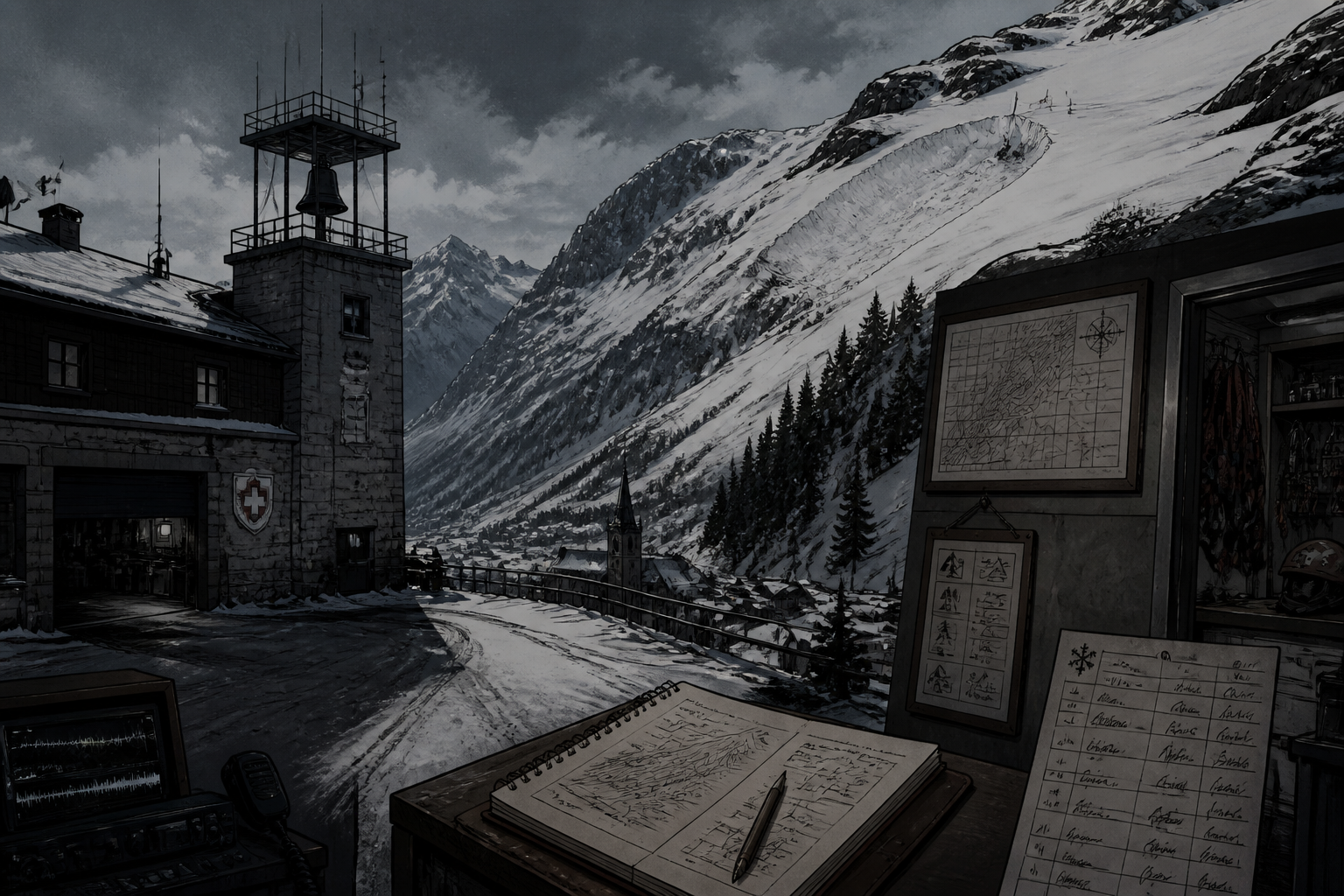 DAILY-THREE-BELLS
Three Bells
Sign in requiredThe alpine rescue base in the Valdiroca valley watches over the slope above the village every winter. One February morning, sixty-two-year-old Aurelio Pancheri—who'd run the base for thirty years and still climbed to measure snow even after retirement—was buried under a collapsed section at the top of that slope. His face emerged after twenty-two minutes, but he wasn't breathing. That morning the courtyard bell rang three times. The first question is who pulled that rope.2026-08-11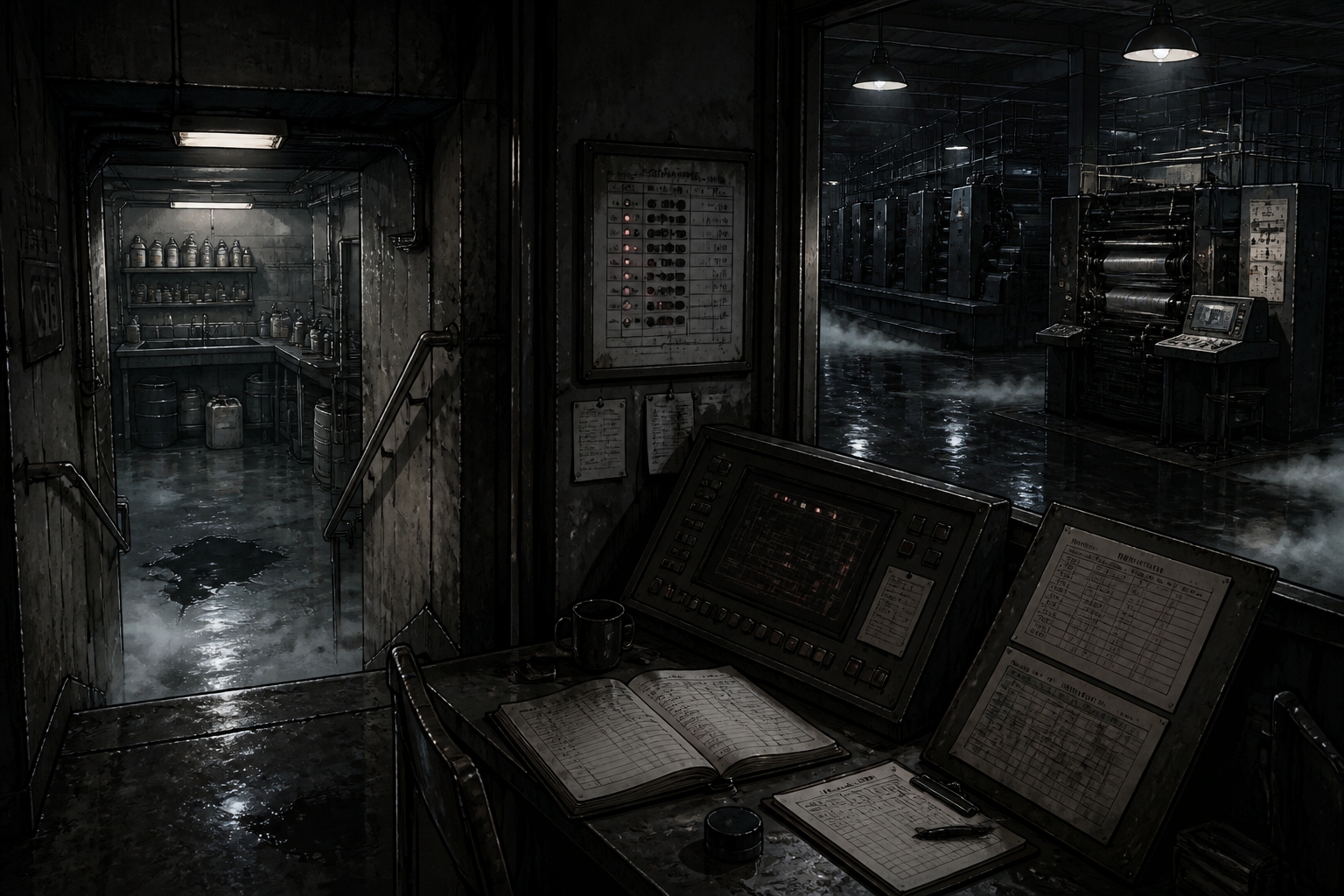 DAILY-PRESS-RUN
Next in Line
Sign in requiredAt the Colbrook Mercury's print hall in Colbrook, England, just before three o'clock on a Thursday morning, Arthur Wetherell—who'd been keeping the night watch—was found collapsed on the basement stairwell landing. He was a man from the founding family, someone who went down to the basement every night to wipe the press rollers himself, and his body bore no marks of struggle or fall. The autopsy found cleaning-solvent compounds in his system—the kind used in that room—and his heart had only quivered finely, unable to push blood. Three positions in that building could have stopped the machines that night, and the presses ran straight through to deadline.2026-08-11 DAILY-CONSENT-FORM
Consent Form
Sign in requiredIn a small city upstream, there stands a regional tissue bank that trims and stores tissue excised from human bodies, then ships it to hospitals as needed. The place is designed so that the number assigned on the day of donation follows unbroken until the day of transplantation. Inside the sterile room of that building, Irži Kolář, who had been matching those numbers for twenty-three years, entered one night and came out with a hoarse voice. He washed his eyes at the sink, returned to his desk to finish filling out the cross-reference sheet, and before dawn was carried out gasping for breath. Left in the room were a container with its lid thrown open and an unwashed floor. Five people held positions adjoining that room that night, each pointing to a different box. To know who filled which box, you must ask them. What remains is one box among those meant to be signed by two people side by side—a box no one signed that night.2026-08-11 DAILY-SILO-BRIDGE
Not Applicable
Sign in requiredAt dawn, as the harvest season drew to a close, Henryk Baran, the cooperative's safety officer, was found buried in grain inside Storage Building No. 3 at the Bielków Grain Cooperative. The cylindrical storage structure—a silo that holds grain stacked dozens of meters high—had claimed him. Cause of death: mechanical asphyxiation, chest compressed by the cascading grain, unable to draw breath. Five people remained on the cooperative grounds that dawn. Interrogate them. Find out why grain flowed from the bottom of Silo No. 3 at that hour.2026-08-10 DAILY-MUTE-HABIT
Hands First
Sign in requiredA nighttime dialysis ward where bodies are connected to machines that filter waste from blood. Gunnar Eklund, sixty-eight, had lain in the same chair three times a week for twelve years. That night he completed his four-hour session and returned to his ward bed, where he was found in the early morning rounds with his heart stopped. He was the patient representative elected to the hospital committee, and for twelve years he had recorded the nights of this room in his notebook. The machine ran normally for all four hours and the alarm never sounded once, yet the potassium that should have been removed remained almost entirely in his blood. Five people touched that chair that night. Question them one by one.2026-08-10 DAILY-SILENT-ALERT
The Warning That Never Rang
Sign in requiredThere's an emergency clinic run by the local medical association, open only nights and holidays. Mori Takehiko, a contract employee who'd been filling prescription packets in that dispensary for twenty years, checked in as a patient one rainy-season night—not even his shift—complaining of fever and throat pain. He saw the doctor, picked up his medication from the dispensary in the same building, went home, and was found dead in his room the next morning. The stomach medicine he'd been taking for days and the antibiotic he'd just received that night overlapped, throwing his heart's electrical rhythm into chaos. Ask the five people who were in that building that night.2026-08-10 DAILY-DILUTION-CELL
One Cell
Sign in requiredOn a humid night before the monsoon, Hsieh Chung-ming, the labor union's occupational health and safety officer at Wei-ching Precision Chemicals—a semiconductor supplier in the Hsinchu Science Park—was found dead of cardiac arrest at dawn. The night before, he had spilled a bottle of cleaning dilution solution on himself while handling it, rinsed off at the sink, changed clothes, and continued his records for over four hours before collapsing. What he had been drenched in was a solution nearly ten times the concentration indicated on the bottle's label. What went into that bottle has already been determined. What remains is to discover what the hand that filled it saw and overlooked. Interrogate the five people whose hands touched the subdivision process—where chemicals from large drums are portioned into smaller bottles.2026-08-10 DAILY-SUCCESSION
The Predecessor's Position
Sign in requiredIn a small Austrian town where the municipal utility company handles electricity, water, funerals, and cremation, sixty-three-year-old Egon Reitner—the safety and environmental inspector who had submitted eight requests to monitor emissions from that room for just two consecutive hours, receiving eight rejections that this facility was not subject to such testing—died four days after spending one such night there. On the night when a backlog of cremations from the two-day holiday for visiting the dead was crammed into a single shift, he entered alone the exhaust filtration room on a night he wasn't even scheduled to work, closed the door, and remained inside for over two hours. On that room's wall hangs a cabinet for protective equipment, and on the door a placard bears not a person's name but a job title—and that night, more than one person held that title. Question the five who worked in that facility that night. Whose hand made the air in that room what it was.2026-08-10 DAILY-TRIAGE-CODE
Code
Sign in requiredLate autumn night after the rain stopped. A single call came into the Orbière Regional Emergency Medical Dispatch Center and was logged as priority two. The caller was Aurélien Bastide, regional emergency medical oversight committee member—a man who'd been filing complaints about this center's triage codes for months. The ambulance worked through three earlier calls before reaching his address. His heart stopped on the hospital emergency ramp. Cause of death: aortic dissection, blood leaking from the torn vessel compressing the heart until it quit. Ask each of the five people on duty that night how that call's priority field came to be marked two.2026-08-10 DAILY-VERIFIED
Identity Verified
Sign in requiredTan Kimseng, safety and quality manager at Banyu General Hospital, was found dead in bed 3 of the post-operative recovery room. A man who'd spent thirty years in this hospital, who now graded other people's night shifts with checklists, lay that night in the very room he inspected, after surgery on his own belly. On one wall of that room hangs an automated dispensing cabinet—drawers that open only after identity verification for controlled medications. For separately tracked drugs, two people must verify together before the drawer unlocks; what goes out gets logged in the register and counted at set intervals. That night he received pain medication twice, and by the six a.m. rounds he was already cold. Question the five people who were in that room. Not a single record was altered.2026-08-10 DAILY-RULE-DENY
Reason Code
Sign in requiredA home-care dispatch agency had been sending someone every night for three months to a second-floor flat in a small German city, where an elderly man needed overnight supervision. One morning in late November, seventy-three-year-old Hartmut Krause was found unconscious in his bed and taken to hospital, where he never woke. He was someone who needed a machine to help him breathe every night, but that night the mask hung on its bedside hook and no one had come to the house. Question the five people who could have filled that night.2026-08-10 DAILY-UNLISTED
The Uncounted
Sign in requiredLate autumn night, the air inside the drying shed of the Antinos Island dairy plant swelled in an instant. Window frames blew outward, and inside, night shift foreman Stavros Kalergis was carried out with burns and scorched air in his lungs, then died at the island clinic. Two names were assigned to that building that night, but three bodies stood at the muster point after the fire passed. Count the five spread across the milking shed and drying shed one by one. On that night when the counter went uncounted, start with what made that room swell.2026-08-10 DAILY-SCORE-CUT
Score
Sign in requiredA sixty-eight-year-old man was found dead in the last unit of Row B at Willowbank Mobile Home Park, on the outskirts of a small Southern town. That night the electricity to his home cut off on its own, and the electric oxygen concentrator he'd kept running all day for his chronic lung condition stopped with it. He died over the course of several hours, and a neighbor opened the door the next morning. This park buys power in bulk from the utility on one meter and resells it to each unit through individual meters, so it falls outside the regulations that govern electric companies—only the laws between landlord and tenant apply. Twelve days earlier, his unit's billing method had been switched from postpaid to prepaid, and the park says it was done per contract and that maintaining the balance was the tenant's responsibility. Five people had access to that account during those twelve days. Each one must be questioned.2026-08-10 DAILY-FLICKER-CUE
Flicker
Sign in requiredEindhoven, Netherlands. The final night of Light Week, which used an old pedestrian tunnel beneath the canal as an exhibition space. Hendrik Folman, a city-contracted facilities safety inspector, was found dead in the tunnel after all visitors had left, slumped against the wall. Cause of death was determined to be status epilepticus—a seizure that, once begun, did not stop on its own and continued for over fifteen minutes. Twenty-four minutes before discovery, the tunnel's lights flickered at a speed never used during the festival. Five people left their names in the tunnel and control room that night, and there is no way to narrow down which hand produced the input that created that speed except by interrogating them one by one.2026-08-08 DAILY-SHADOW-RANK
Exposure
Sign in requiredOn the last sweltering night before the monsoon rains, Choi Pan-sul, auditor of the merchants' association, ate a few slices of sashimi at the communal prep station in Guhang's traditional fish market. Twenty-six minutes later he said his lips were numb. An hour and a half after that he could no longer pronounce his own name. The cause of death was tetrodotoxin—the poison that accumulates in a pufferfish's body—which stopped the muscles he used to breathe, leading to respiratory paralysis. He was moved while his eyes were still open, unable to speak, and died at dawn the next day. The morning before, the communal prep station's channel had been pushed to the very bottom of the market's online sales listings, and the uproar had not subsided by that night. For three months Choi had been cross-checking the pufferfish handling license roster against the prep station assignment sheet. Of the five people who remained in the prep station that night, who placed that plate in front of him is a question that must be asked of all five.2026-08-07 DAILY-ANTIVENOM
Redistribution
Sign in requiredOn a late-summer night when the heat lingered past dark, Trevor Mullane, coordinator at the Barralong Wildlife Rescue Station, was bitten by a brown snake during a residential yard capture callout. Emergency treatment and transport followed protocol, and the hospital was twenty-six minutes away. But the Barralong Regional Hospital refrigerator held no brown snake antivenom—the injectable serum in small glass vials that neutralizes the venom. Not a single vial remained of what should have been this hospital's allocation. The antivenom flown in from the capital reached his arm four hours and twenty minutes after the bite, and by then his blood had long since lost the ability to clot. He died the next morning from intracranial hemorrhage. Five people had access to that refrigerator. Find out whose hand packed the last three vials into a box six days prior that afternoon.2026-08-06 DAILY-BACKDRAFT-DRILL
As Trained
Sign in requiredAt 02:38 in the night bakery wing of Fenwick Bakery in the Halbridge Industrial Estate, England, a fire broke out. The responding fire brigade extinguished it in twenty minutes, but during that time flames erupted once outward from the fermentation room doorway, and Maurice Brightwell, the Halbridge Fire Station on-site safety officer standing at that spot, took the blast full in the face and front of the neck. He was carried away without uttering a word and died five hours later in hospital from acute airway burns—his upper airway above the vocal cords swelling shut after inhaling superheated gases. That night there were two ventilation openings to exhaust the smoke, and the order in which the two were opened was the reverse of what the manual prescribed. The five people in front of the bakery wing that dawn each remember a different sequence. Pick out which memory opened that door first.2026-08-05 DAILY-SLEEP-LAB
Night Shift
Sign in requiredNorthville Sleep & Respiratory Clinic, Lindholdt, Canada. Night testing wing. Martin Boivin, the sleep technologist who'd kept watch over this building's nights for fifteen years, was found dead in front of the equipment room door at the end of the corridor. Cause of death: asphyxiation by neck compression—airway and blood flow both cut off when something pressed against the throat. Interrogate the five people who were inside the testing wing that night. Find out whose arm it was that closed around her neck in that hallway.2026-08-04 DAILY-AUTO-NOTICE
Automatic Dispatch
Sign in requiredEarly spring dawn at the Lindholm Port Vesterhavn offshore wind maintenance base. Electrical safety supervisor Esben Kjær was found dead in the lower substation of test turbine T0. Cause of death: arc flash—electricity tearing through air, generating instantaneous extreme heat. His upper body bore extensive burns, and his airways were damaged from inhaling superheated gas. The circuit, de-energized for three days during maintenance, was re-energized at 04:10. He was still inside. Five names were on the T0 maintenance roster that dawn. Without interrogation, there's no way to know what the hand that closed that circuit at 04:10 knew in that moment.2026-08-03 DAILY-STILL-ARRIVING
Instructions Still Arriving
Sign in requiredLate summer dawn, Highbayson National Park, 13,300 feet above sea level at Saddleback patrol station—former rescue chief Wendell Greer died. Cause of death: high-altitude pulmonary edema, a condition where fluid fills the lungs at elevation. The cure is descent, but he stayed at the station all night. Descent began only two hours before he died. Five people were tied to that mountain and the rescue base below that night. There is one thing you will never know unless you ask: whose hand held the descent back for six hours.2026-08-02 DAILY-GUARANTOR
The Inherited Name
Sign in requiredOn an early winter night, Arima Soji, auditor of the Sakamine Private Taxi Cooperative, was found collapsed at the bottom of a maintenance pit in the cooperative's shared garage. Though no fire had been lit anywhere in the garage, his body was saturated with carbon monoxide, and the shutter had been down all night. Round up the five who left their names at the garage that night. Whether to write it off as an accident—that's a decision for later.2026-08-01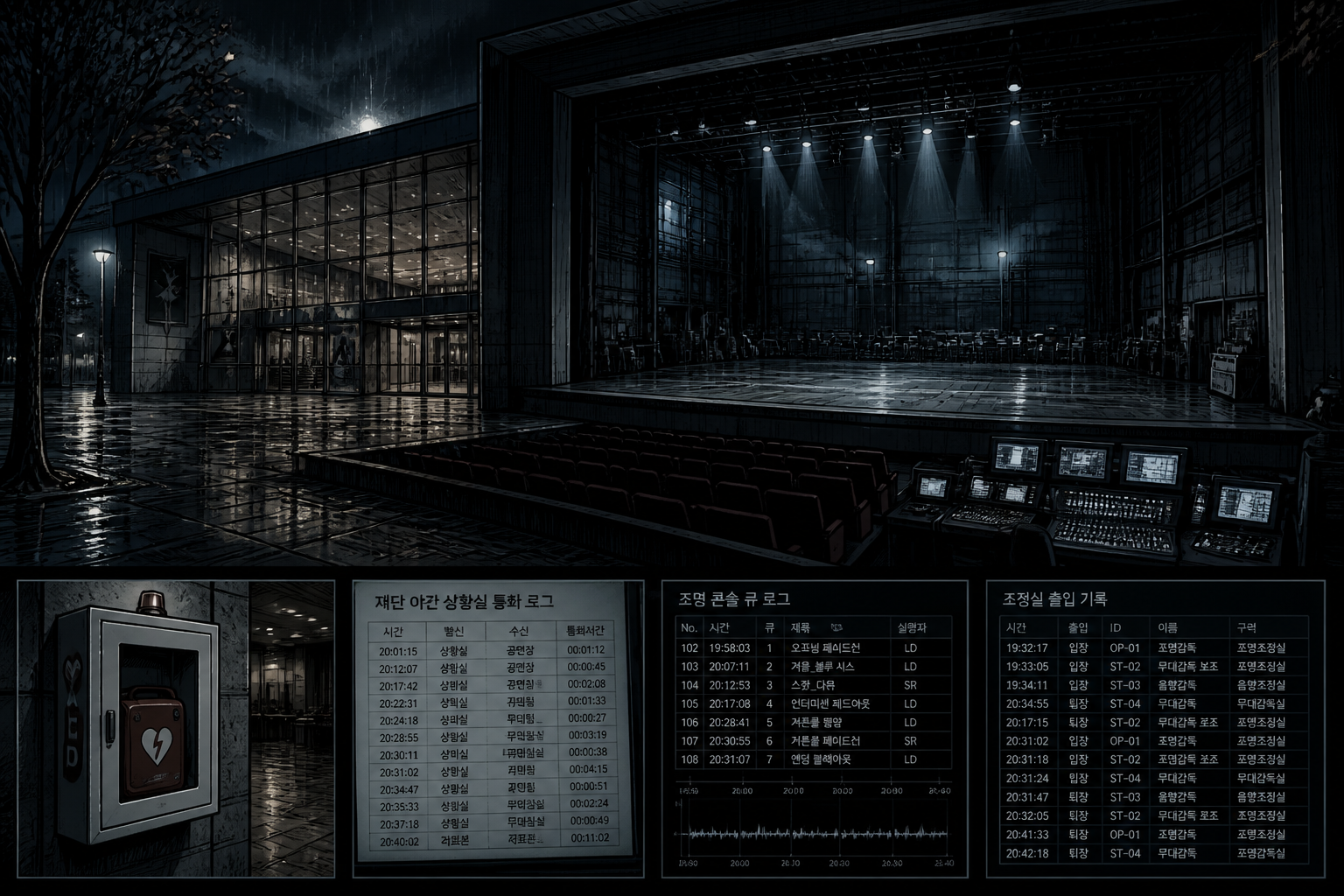 ONB-CURTAIN
First Report
Starter case · freeOn a rainy late-autumn night, Han Dong-yeol, the stage manager who'd held the post at the municipal theater for fifteen years, collapsed onstage from cardiac arrest. It was just after the winter-season night rehearsal ended, and four people remained in the building. Cause of death: ventricular fibrillation—a heart that quivers but cannot pump—witnessed cardiac arrest with bystanders present. Yet it took eleven minutes from collapse to first defibrillation, the electric shock meant to restart the heart. Interrogate the four who were upstairs and down during those eleven minutes. Determine whether this death was misfortune or something else.2026-07-27 ONB-CHECKUP
Pre-Exam Suspension
Starter case · freeOn a humid night just before the rainy season, the night-shift assembly line supervisor at a precision-parts factory running three shifts was found collapsed. Cause of death: hypertensive intracerebral hemorrhage. The autopsy revealed none of the medication he took daily was in his system. The company stated it was death from a pre-existing condition, unrelated to work. But he was a man who did as he was told, and two weeks before his death the company had notified him of something. Five people in this facility had a hand in that notification. Interrogate those five and find the hand that made him stop his medication.2026-07-27 ONB-RESET
Reset
Starter case · freeLate one winter night during a heavy snowstorm, a fire broke out in the electrical room on the basement level of an aging downtown mixed-use commercial building due to overheated wiring. Moon Tae-woong, the night security guard and building fire safety captain, was found on the basement stairwell landing and died en route to the hospital; cause of death was airway thermal injury and asphyxiation from inhalation of combustion products. The building's fire safety equipment is monitored remotely 24/7 by an outsourced fire monitoring control center located 20 kilometers away, rather than by an on-site disaster control room. Five people were connected to that building and its monitoring system that night. Interrogate the five and find out why the burning building made no sound.2026-07-27Season 1
View on the boardArc 1: The Missing Line · Arc 2: The Cure Was the Trigger · Arc 3: The Hand That Feeds · Arc 4: Crossed Off · Arc 5: The Borrowed Face